How to remove mold from shower tile
Mold on shower tile usually starts in the grout — those thin, porous lines between tiles that absorb moisture and never fully dry out. Over time, the mold spreads from grout lines onto the tile surface itself, creating dark patches that look terrible and can affect your health if left untreated.
The good news is that tile itself is non-porous, which means mold sitting on the tile surface wipes off easily. The challenge is the grout, caulk, and the areas behind tiles where moisture hides. Here’s how to handle all of it.
Why Mold Grows on Shower Tile
Shower tile creates a microclimate mold loves. Hot water generates steam that condenses on every surface, soap scum and body oils provide food, and grout lines act like tiny sponges that hold moisture for hours after your shower ends.
Mold can establish itself in 24–48 hours under these conditions. If your bathroom exhaust fan is weak or you don’t run it after showering, the problem accelerates dramatically.
Mold on shower tile rarely stays isolated. If you’re seeing it on the tile, also check your shower floor, shower head, bathtub, and bathroom ceiling.
What You’ll Need
- White distilled vinegar or hydrogen peroxide (3%)
- Baking soda
- Spray bottle
- Stiff grout brush
- Old toothbrush (for corners and edges)
- Rubber gloves
- Dedicated mold removal spray (for deep grout mold and black mold)
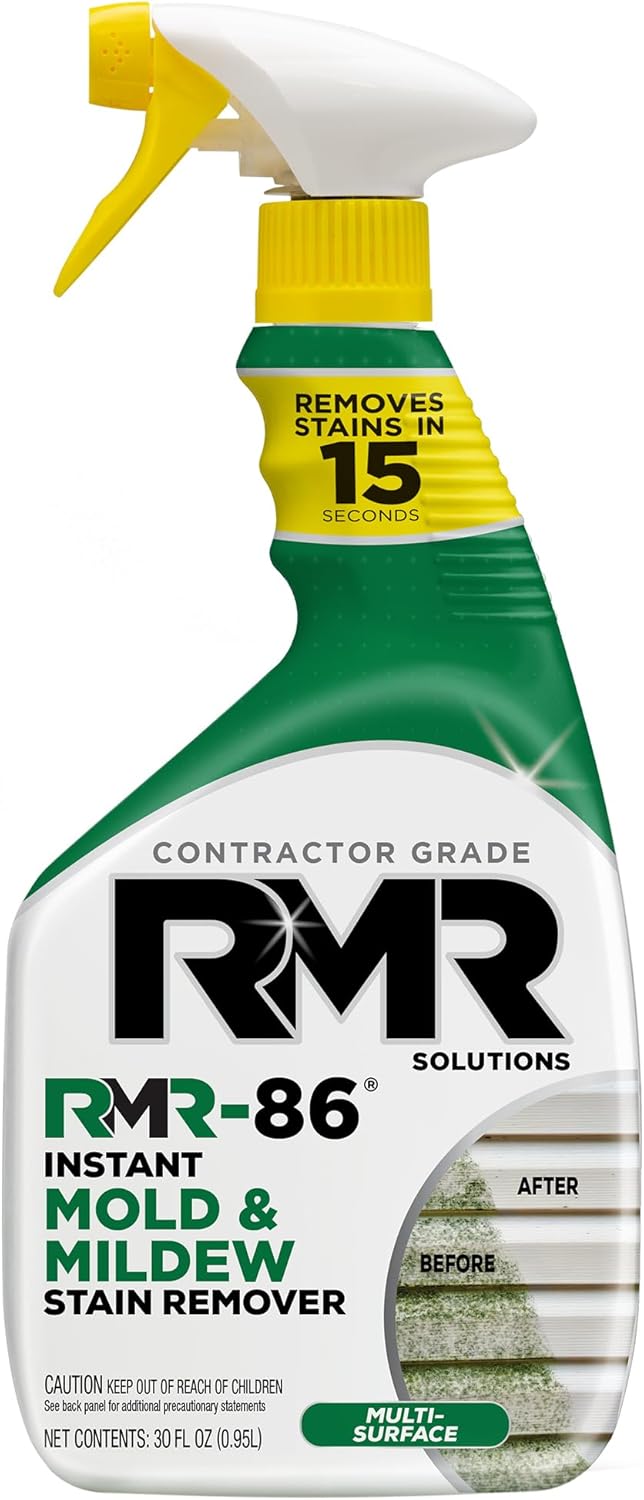
Click Here for Our Favorite Mold Remover
How to Remove Mold from Shower Tile (Step by Step)
Cleaning the Tile Surface
Mold on the tile face is the easy part, since tile is non-porous and doesn’t absorb mold the way grout does.
Step 1: Spray the tile surface with undiluted white vinegar or 3% hydrogen peroxide. Cover all discolored areas generously.
Step 2: Let it sit for 10–15 minutes. Don’t rinse early — the dwell time is what kills the mold.
Step 3: Wipe down with a clean cloth or sponge. For textured tile, use a soft brush to get into the surface texture.
Step 4: Rinse with warm water and dry with a towel.
Cleaning Mold from Grout Lines
Grout is where the real work is. Because grout is porous, mold grows into it — not just on top of it.
Step 1: Make a paste of baking soda and water (about 3:1 ratio). Spread it along the grout lines with your finger or an old toothbrush.
Step 2: Spray vinegar over the paste. Let it fizz and sit for 15–20 minutes.
Step 3: Scrub the grout lines with a stiff grout brush, applying firm pressure. Work in small sections so you can see your progress.
Step 4: Rinse and inspect. If dark staining remains, apply a dedicated mold remover directly to the grout, let it dwell for 10–15 minutes, and scrub again.
Step 5: For persistent grout stains, soak paper towels in hydrogen peroxide, press them against the grout lines, and leave them for 1–2 hours. This extended contact time can lift stains that scrubbing alone won’t.
Cleaning Mold from Tile Caulk
Caulk at the corners of your shower, where tile meets the tub, and along the edges of the shower floor is a prime mold target. Unfortunately, mold grows inside silicone and latex caulk — you can scrub the surface clean, but the mold roots remain.
If your caulk is discolored and cleaning doesn’t restore it, the only real fix is removal and replacement. Cut out the old caulk with a utility knife or caulk removal tool, clean the gap with mold remover, let it dry completely, and apply fresh mold-resistant silicone caulk.
How to Handle Mold Behind Shower Tiles
This is the situation that concerns professionals. If tiles are loose, hollow-sounding when tapped, or if you notice a persistent musty smell even after cleaning all visible mold, water may be getting behind the tiles.
Mold behind tiles feeds on the drywall, cement board, or wood framing that supports your shower. You can’t fix this with surface cleaning — it requires removing the affected tiles, treating the substrate, and potentially replacing damaged backing material.
Signs of mold behind shower tiles include tiles that are loose or cracked, grout that keeps crumbling or falling out, a musty smell that won’t go away, and discoloration or warping on the wall behind the shower (visible from the other side). If you notice any of these, contact a mold remediation professional before the damage spreads.
How to Prevent Mold on Shower Tile
Seal your grout. This is the single most effective preventive step. Grout sealer fills the pores in grout so moisture can’t penetrate. Apply it once a year — it takes about 30 minutes for a typical shower and dramatically reduces mold growth.
Squeegee tile walls after showering. This removes the water film that feeds mold. It takes 30 seconds and prevents the majority of tile mold.
Run ventilation for 20–30 minutes post-shower. Your exhaust fan (or an open window) needs to run long enough to drop humidity back to normal levels. If the mirror is still foggy when you leave the bathroom, you’re not ventilating enough.
Clean weekly with vinegar. A quick spray of undiluted vinegar on tile and grout once a week prevents mold from establishing. No scrubbing needed — just spray and let it dry.
Fix leaks immediately. A dripping shower head or leaking handle keeps the tile wet between showers, which is exactly what mold needs. Even a slow drip adds up to a big moisture problem over time.
A good dehumidifier also helps if your bathroom humidity stays elevated despite ventilation, and an air purifier rated for mold can reduce airborne spore counts throughout the space.
When to Call a Professional
Shower tile mold is usually a DIY job. But get professional help if mold keeps returning within days of cleaning, tiles are loose or the wall behind them is damaged, you see mold spreading to walls or the ceiling beyond the shower, or the affected area covers more than about 10 square feet.
Here’s a breakdown of typical mold remediation costs so you know what to expect.
Frequently Asked Questions
Q: What’s the best way to clean mold from colored grout without bleaching it?
A: Use vinegar or hydrogen peroxide instead of bleach. Both kill mold effectively without discoloring pigmented grout. The baking soda paste method is also safe for colored grout — the mild abrasion removes mold without affecting the color.
Q: How do I know if mold is behind my shower tiles?
A: Tap on the tiles — if they sound hollow instead of solid, the adhesive or backing may be compromised by moisture. Other signs include tiles that are loose, grout that constantly cracks or falls out, a persistent musty smell after surface cleaning, and visible discoloration on the wall behind the shower.
Q: Can I paint over moldy grout?
A: No. Painting or applying grout colorant over active mold traps moisture underneath and allows the mold to keep growing hidden from view. Always clean and kill the mold first, let the grout dry completely, and then apply grout sealer or colorant.
Q: Is vinegar or hydrogen peroxide better for shower tile mold?
A: Both work well. Vinegar is slightly better for mineral buildup and soap scum (common on shower tile), while hydrogen peroxide has a slight edge on deep mold stains and is better for light-colored grout. You can use either — just don’t mix them together.
Q: How often should I seal my shower grout?
A: Once a year for most showers. If your shower gets heavy use (multiple people daily), every 6 months is better. You can test whether your seal is still effective by dripping water on the grout — if it beads up, the seal is good. If it soaks in, it’s time to reseal.
Final Thoughts
Mold on shower tile is mostly a grout problem. Once you clean the mold and seal the grout, the problem typically stays gone — as long as you maintain ventilation and keep surfaces dry after showering.
Don’t forget to check the other common mold spots in your bathroom: the shower floor, bathtub, window sill, and shower head. Mold in one spot usually means conditions are right for mold everywhere.