How to remove mold from shower head
That black or pinkish buildup around your shower head isn’t just hard water — it’s likely mold. Shower heads are one of the most overlooked spots for mold growth because they stay warm and wet constantly, and most people never think to clean inside or behind them.
Left alone, a moldy shower head sprays mold spores directly into the air you breathe every time you shower. If you’ve been dealing with unexplained allergies, headaches, or respiratory irritation, your shower head could be the culprit. (Here are the 10 warning signs of mold toxicity to watch for.)
The good news: cleaning mold from a shower head is a quick job. Here’s how to do it right — and keep it from coming back.
Why Mold Grows on Shower Heads
Shower heads create a perfect environment for mold. Warm water flows through them daily, moisture clings to every surface, and the small crevices around the nozzle and faceplate rarely dry out completely. Mold can start growing within 24–48 hours in these conditions.
The most common types you’ll see on shower heads are black mold (often Aspergillus or Cladosporium) and pink mold (which is actually a bacteria called Serratia marcescens). Both thrive in humid bathrooms — especially if ventilation is poor.
If you’re seeing mold on your shower head, chances are it’s also developing on nearby surfaces. Check your shower walls and enclosure, shower tile and grout, and shower floor as well.
What You’ll Need
You probably already have most of these at home:
- White distilled vinegar
- Baking soda
- A plastic bag (gallon-sized zip-lock works well)
- Rubber band or zip tie
- Old toothbrush or small scrub brush
- Rubber gloves
- A dedicated mold removal spray (for stubborn buildup)
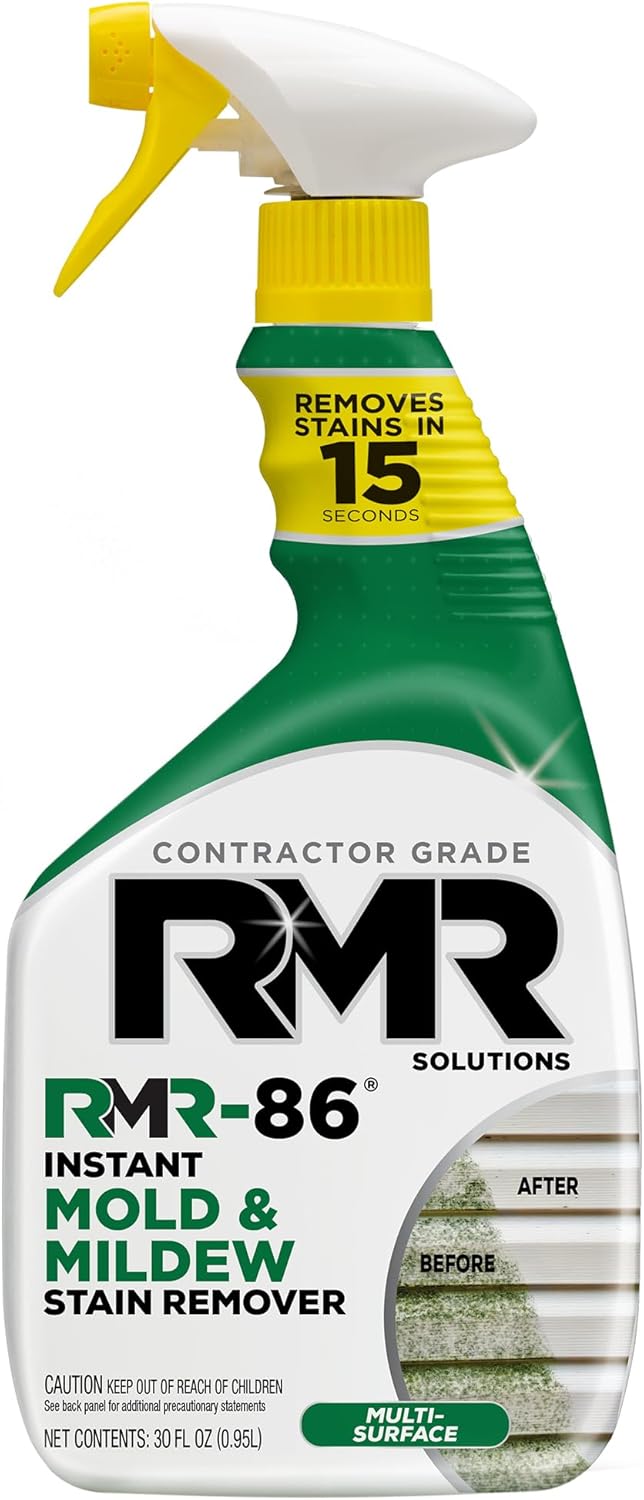
Click Here for Our Favorite Mold Remover
How to Remove Mold from a Shower Head (Step by Step)
Method 1: Vinegar Soak (Best for Light to Moderate Mold)
This is the easiest approach and works well for most situations.
Step 1: Fill a plastic bag with undiluted white vinegar — enough to fully submerge the shower head faceplate.
Step 2: Pull the bag up around the shower head so the faceplate is completely submerged in vinegar. Secure the bag with a rubber band or zip tie around the shower arm.
Step 3: Let it soak for at least 2–4 hours. For heavy buildup, leave it overnight.
Step 4: Remove the bag and scrub the nozzle holes and faceplate with an old toothbrush. Pay attention to the edges and crevices where mold hides.
Step 5: Run the shower on hot for 2–3 minutes to flush out loosened deposits.
Method 2: Remove and Deep Clean (Best for Heavy Mold)
If the vinegar soak doesn’t get it all — or if you can see mold behind the faceplate — remove the shower head for a thorough cleaning.
Step 1: Unscrew the shower head from the arm (turn counterclockwise). Use a cloth between the wrench and the fitting to avoid scratching the finish.
Step 2: Disassemble any removable parts — the faceplate, filter screen, and flow restrictor.
Step 3: Soak all parts in a bowl of equal parts white vinegar and warm water for 1–2 hours.
Step 4: Make a paste with baking soda and a few drops of water. Apply it to any remaining mold spots and scrub with a toothbrush.
Step 5: For stubborn black mold, apply a dedicated mold removal spray, let it sit for 10 minutes, and scrub again.
Step 6: Rinse all parts thoroughly, reassemble, and reattach. Wrap the threads with fresh plumber’s tape before screwing it back on.
What About Black Mold on a Shower Head?
True black mold (Stachybotrys chartarum) is less common on shower heads because it prefers porous materials like drywall and wood. However, other dark-colored molds like Cladosporium and Aspergillus niger are very common in showers and look nearly identical.
Regardless of the species, the cleaning methods above work on all of them. If you’re seeing black mold spreading beyond the shower head to your bathroom ceiling or walls, that suggests a larger moisture problem that may need professional mold remediation.
How to Prevent Mold from Coming Back
Cleaning mold off a shower head is straightforward — keeping it gone requires a few habit changes:
Improve ventilation. Run your bathroom exhaust fan during every shower and for at least 20–30 minutes afterward. If you don’t have an exhaust fan, crack a window. Poor ventilation is the number one reason bathroom mold keeps returning.
Dry the shower head after use. A quick wipe-down with a towel removes the moisture mold needs to grow. This takes 10 seconds and makes a significant difference.
Vinegar spray monthly. Keep a spray bottle of undiluted white vinegar in the bathroom. Spray the shower head (and tile and grout) once a month as a preventive treatment.
Run a dehumidifier. If your bathroom stays humid despite ventilation, a good dehumidifier keeps humidity below the 50% threshold where mold struggles to grow.
Replace old shower heads. If your shower head is heavily corroded or the mold keeps returning no matter what you do, replacement is often the smarter move. Mineral buildup inside old shower heads creates a surface mold loves to grip onto.
When to Call a Professional
A moldy shower head is almost always a DIY fix. But call a professional if you notice mold spreading across your bathroom ceiling, behind tiles, or into the wall cavity behind the shower. These situations suggest hidden moisture damage that surface cleaning won’t solve.
If you’re unsure about the extent of the problem, here’s what professional mold remediation typically costs — catching it early always saves money.
Frequently Asked Questions
Q: Can a moldy shower head make you sick?
A: Yes. Every time you run a moldy shower head, it aerosolizes mold spores into the steam you breathe. This can trigger allergic reactions, sinus congestion, headaches, and respiratory irritation — especially in people with asthma or weakened immune systems. Learn more about the warning signs of mold toxicity.
Q: Is the pink stuff on my shower head mold?
A: Technically, no — pink buildup is usually Serratia marcescens, a bacteria, not a true mold. However, it thrives in the same conditions and should be cleaned the same way. If you see pink, you likely have mold growing nearby too.
Q: How often should I clean my shower head to prevent mold?
A: A vinegar soak once a month is ideal. At minimum, do it every 2–3 months. If your bathroom has poor ventilation or you notice mold returning quickly, increase the frequency and address the ventilation issue.
Q: Can I use bleach instead of vinegar on a shower head?
A: You can, but vinegar is usually better for shower heads. Bleach can damage certain finishes (especially brushed nickel or oil-rubbed bronze) and doesn’t dissolve mineral buildup the way vinegar does. For most shower head mold, vinegar is more effective and safer for the fixture.
Q: Should I replace my shower head if it keeps getting moldy?
A: If mold returns within a week or two despite regular cleaning, the shower head likely has internal buildup that can’t be reached. At that point, replacing it is more practical (and often cheaper) than fighting a losing battle.
Final Thoughts
Mold on a shower head is common, easy to fix, and preventable with basic maintenance. A vinegar soak every few weeks keeps the problem from coming back, and improving bathroom ventilation solves the root cause.
If mold is appearing in multiple spots around your bathroom — your shower floor, bathtub, window sill, or ceiling — that’s a sign of a bigger ventilation or moisture issue that’s worth addressing before it gets worse.